If you filled your tank last week and felt the pinch again this week, you are not imagining things. The petrol price in Pakistan today keeps moving, and there is a clear reason behind every change. At Taxbeat, we track every OGRA notification, so you always know where things stand and what it means for your monthly budget.
As of September 17, 2026, petrol in Pakistan is priced at Rs 391.22 per litre, based on the latest notification from the Oil and Gas Regulatory Authority (OGRA). That number is accurate for this date only. It is not fixed, and it will change again at the next revision.
The new petrol price in Pakistan 2026 has followed a bumpy road this year, swinging from record highs to temporary relief cuts and back up again. Understanding how that number is set makes the whole picture much easier to follow.
What Is the Petrol Price in Pakistan Today?
The petrol price in Pakistan today refers to the rate you pay per litre at the pump right now, as fixed by the government through OGRA. Unlike an open market where prices shift by the minute, Pakistan runs a regulated system. That system decides how often the rate changes and by how much.
Right now, here is where things stand:
- Petrol: Rs 391.22 per litre
- High-speed diesel: Rs 421.45 per litre
- Latest change: petrol up by Rs 6.88, diesel up by Rs 5.62
- Effective date: September 17, 2026
- This marked the eighth straight increase under the current daily review system.
Keep this in mind. This rate is accurate as of the date above and is subject to OGRA’s next revision. Prices in Pakistan rarely sit still for long, so always confirm the latest figure before assuming these numbers still apply.
| Petroleum Product | Price Per Litre | Change |
|---|---|---|
| Petrol | Rs 389.14 | -Rs 1.65 |
| Diesel | Rs 424.04 | -Rs 0.88 |
How OGRA Decides the New Petrol Price in Pakistan 2026
Every OGRA petrol price update follows a set formula, not guesswork. OGRA looks at international oil prices, freight costs, refining margins, and the rupee-to-dollar exchange rate, then calculates what it actually costs to bring fuel into the country.
The review cycle itself has changed more than once in 2026. For years, prices were reviewed every two weeks. That shifted to a weekly cycle earlier in the year, and then again on July 17, 2026, when the government moved to a daily pricing model.
Under the current system, OGRA calculates rates using a seven-day rolling average of global prices and publishes an update almost every day. The idea is simple. When international oil prices jump suddenly, especially during periods of tension in the Middle East, a long gap between reviews leaves local prices badly out of step with real import costs. Daily updates close that gap.
A few factors drive each Ogra petrol price update:
- International crude oil and refined product prices, based on Platts benchmarks.
- Freight, insurance and handling costs for imported fuel
- The Pakistani rupee’s value against the US dollar
- Government taxes, levies and duties added on top of the base cost
On the tax side, the government currently collects around Rs 114 per litre in duty and levy on petrol, separate from the import cost itself. That figure stays fixed even when the underlying price moves, so it always forms part of the final number you see at the pump.
So when people search for the new petrol price in Pakistan 2026, they are really asking about the outcome of this formula rather than a random decision made behind closed doors.
Petrol Price in Pakistan History: Recent Update Cycles
Looking at recent cycles gives a clearer picture than any single number on its own. Here is how the petrol price in Pakistan has moved through the first half of September 2026 alone.
| Effective Date | Petrol Price (Rs per Litre) | Change from Previous Cycle |
| September 08, 2026 | 358.77 | +12.90 |
| September 09, 2026 | 364.35 | +5.58 |
| September 11, 2026 | 370.80 | +3.05 |
| September 12, 2026 | 375.82 | +5.02 |
| September 16, 2026 | 384.34 | +4.10 |
| September 17, 2026 | 391.22 | +6.88 |
In just nine days, petrol went up by more than Rs 32 per litre. That is the kind of movement daily pricing brings, and it explains why so many people now check the petrol price in Pakistan today before planning their weekly fuel budget, rather than assuming last month’s rate still holds.
Zoom out further, and the picture gets even sharper. Earlier in 2026, petrol touched a record high of Rs 458.41 per litre in April, after a sudden escalation in Middle East tensions disrupted global oil supply. A series of relief cuts brought the price back down over the following months, including a notable reduction in July. The run of increases through September shows that the earlier relief trend is reversing again.
What Is Behind the Recent Petrol Price Increase in Pakistan?
This kind of petrol price increase Pakistan has faced repeatedly through 2026 usually traces back to the same two factors. Renewed tension in the Middle East pushed international crude and refined product prices higher, and Pakistan imports the large majority of the fuel it consumes.
A softer rupee against the dollar adds a second layer of pressure. Even when global oil prices hold roughly steady, a weaker exchange rate raises the landed cost of every imported litre, and that added cost eventually shows up at the pump.
None of this is speculation about where prices go next. It simply explains how the current formula works. Whenever a petrol price increase Pakistan-wide takes hold, OGRA is passing on real cost changes from the international market and currency movements rather than absorbing them into the budget.
How Rising Fuel Costs Affect Small Businesses in Pakistan
Fuel prices do not only hit private car and bike owners. They ripple through nearly every small business that depends on transport, and the effect usually shows up within days rather than weeks.
Consider a few common examples:
- Delivery riders and courier services see their per-order cost rise, which often gets passed on through delivery fees.
- Small transport operators running rickshaws or vans absorb higher running costs before fares catch up.
- Retailers and traders who rely on road freight for stock often pay more for goods once trucking costs increase.
- Home-based businesses using bikes for local deliveries feel the pinch directly on their profit margin.
For a business owner, tracking the petrol price in Pakistan today is not just a personal budgeting exercise. It is part of basic cost planning, the same way you would track rent or supplier prices. A Rs 10 or Rs 15 jump per litre, repeated across dozens of trips a month, adds up quickly on a small business’s books.
PM Fuel Relief Scheme 2026: What It Means for You
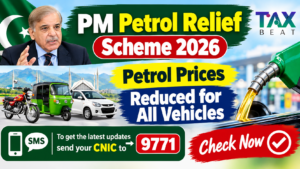
With prices climbing this fast, the government introduced the PM Fuel Relief Scheme 2026 to soften the impact on lower-income households and small vehicle owners. Prime Minister Shehbaz Sharif announced the scheme on September 13, 2026, as global oil prices and rupee pressure pushed the petrol price in Pakistan sharply higher.
This petrol subsidy program in Pakistan 2026 is targeted, not universal. It applies to specific vehicle categories, each with its own monthly quota, rather than reducing the price for every driver across the board.
Who Is Eligible for the PM Fuel Relief Scheme 2026
- Motorcycles, rickshaws, Qingqi and other two- and three-wheelers: Rs 100 per litre relief on up to 20 litres a month, worth up to Rs 2,000 monthly
- Cars with engines up to 800cc, including models such as the Suzuki Mehran, Alto and Bolan: Rs 100 per litre relief on up to 30 litres a month, worth up to Rs 3,000 monthly
The scheme rolled out in Islamabad first, starting at midnight between September 14 and 15, then expanded nationwide, including Azad Jammu and Kashmir and Gilgit Baltistan, from midnight between September 16 and 17.
How to Register for the PM Fuel Relief Scheme
- Send your vehicle and mobile number details by SMS to 9771 to register.
- Registration is checked live against NADRA records and telecom SIM data, so use your own registered mobile number.
- Once approved, send the message TOK to 9771 before heading to the pump.
- You will receive a ten-digit token by SMS, valid for ten days.
- Show that token to the pump attendant to get petrol at the discounted rate, within your eligible monthly quota.
Registration steps can be refined as the scheme matures, so it is worth following the official awareness campaign for the latest instructions rather than relying on secondhand posts online.
Real World Example: How a Rs 10 to 15 Hike Hits Your Monthly Budget
Numbers on a government notification feel abstract until you put them against your own fuel use. Here is what a Rs 10 to 15 per litre increase actually costs two common riders, and how the PM Fuel Relief Scheme changes that picture.
A typical motorcycle owner in a city like Karachi or Lahore uses around 40 litres of petrol a month for the daily commute. A Rs 10 increase adds roughly Rs 400 to that month’s fuel spend. A Rs 15 increase pushes the extra cost closer to Rs 600, on top of whatever the base price already was.
An 800cc car owner, using around 60 litres a month, feels a bigger jump. A Rs 10 increase adds about Rs 600 to the monthly bill. A Rs 15 increase adds roughly Rs 900.
Price Without Subsidy vs With PM Fuel Relief Scheme
| Vehicle Type | Monthly Petrol Use | Extra Cost from a Rs 15 Hike (No Scheme) | Relief Under PM Fuel Relief Scheme | Net Effect for Eligible Users |
| Motorcycle | 40 litres | About Rs 600 more | Up to Rs 2,000 on the first 20 litres | Relief more than covers the hike |
| 800cc Car | 60 litres | About Rs 900 more | Up to Rs 3,000 on the first 30 litres | Relief more than covers the hike |
For eligible motorcycle and small car owners, the scheme does more than absorb a single price hike. It can leave real money back in their pocket each month, as long as they register and collect their token before every fill-up.
Larger cars, bikes outside the eligible category, and anyone who has not registered will not see this relief. For them, the full increase lands directly on the fuel bill, which is exactly why understanding your eligibility matters as much as watching the headline price.
New Petrol Price in Pakistan 2026: What Comes Next
Nobody can say with certainty what next month’s rate will be. Daily pricing means the number can move in either direction, based on international oil markets and how the rupee performs against the dollar.
What is certain is the mechanism itself. OGRA will keep publishing updates based on the seven-day rolling average, and the PM Fuel Relief Scheme will keep offering targeted relief for as long as the government keeps it active. Whether you call it the PM Fuel Relief Scheme or petrol subsidy Pakistan 2026, the goal is the same: cushion the impact for the drivers who feel it most.
For a deeper look at how the subsidy works, including full eligibility rules and troubleshooting tips for the SMS registration process, read our detailed guide on the PM Fuel Relief Scheme Petrol Subsidy 2026.
Fuel prices in Pakistan will keep shifting as long as global oil markets stay volatile. Taxbeat updates this page after every confirmed OGRA notification, so you always have a reliable place to check the current rate before you plan your budget.
Frequently Asked Questions
What is the petrol price in Pakistan today?
As of September 17, 2026, petrol is priced at Rs 391.22 per litre across Pakistan, following the latest OGRA notification. This rate holds only until the next revision, so check for updates before relying on it for future planning.
How often does OGRA update the petrol price in Pakistan?
Since July 17, 2026, OGRA has reviewed and updated petrol prices daily, using a seven-day rolling average of international oil prices. Before that shift, prices were reviewed on a weekly and, earlier still, a two-week basis.
Why did the petrol price increase in Pakistan recently?
Rising international crude oil prices, driven partly by tension in the Middle East, combined with pressure on the Pakistani rupee, pushed the landed cost of fuel higher. OGRA passed that cost through the pump price under its regular pricing formula.
Who is eligible for the PM Fuel Relief Scheme 2026?
Motorcycles, rickshaws, Qingqi and other two- and three-wheelers qualify for Rs 100 per litre relief on up to 20 litres a month. Cars with engines up to 800cc qualify for the same relief on up to 30 litres a month.
How do I register for the PM Fuel Relief Scheme?
Send your vehicle and mobile details by SMS to 9771 to register. Once approved, send TOK to 9771 before visiting a pump to receive a ten-digit token, then show it to the attendant to claim your discount.
Does the petrol subsidy Pakistan 2026 program cover diesel too?
No. The current PM Fuel Relief Scheme applies only to petrol for eligible motorcycles, rickshaws, Qingqi, and cars up to 800cc. It does not extend to high-speed diesel.
Will the petrol price in Pakistan keep rising?
There is no way to predict future prices with certainty. Rates move with international oil markets and the rupee-to-dollar exchange rate, so they can rise or fall at the next OGRA update.
Where can I check the latest petrol price in Pakistan today?
You can check the official OGRA notification directly, or come back to this page. We update it after every price revision, so you always see the current confirmed petrol price in Pakistan today, along with what changed and why.